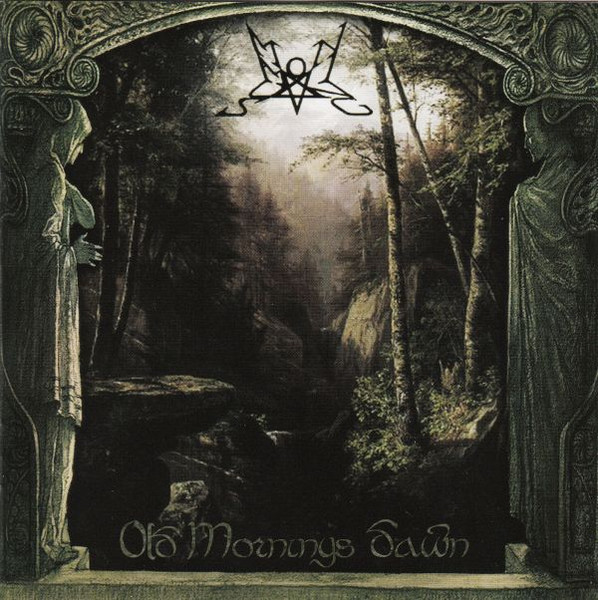

Origin : Austria
Genre : Atmospheric Black Metal
Release : 1997
Album downloads only available to members
Album Info / Review
**Album Review: Summoning – *Dol Guldur***
*Dol Guldur* sits right at the middle of Experimental Black‑Doom’s spectrum, where crushing power‑metal riffs barely manage to hint at the grand epic that Summoning always promised. It’s a 78‑minute expedition through the shadowy woodlands of Middle‑Earth, narrated by two guitars, a synth choir, and a drum machine that keeps the rest of the band from becoming a myth.
—
### Sound & Atmosphere
Summoning has always carved a niche as the “The Lord of the Rings” soundtrack in handheld form. *Dol Guldur* turns that promise into a subterranean odyssey. The album opens with a haunting, bowed‑string progression that immediately signals doom. Unlike the polished shimmer of *Stardust Elysium* or the thin crescendos of *Song of the Wanderer*, this record throbs with an undercurrent of rawness: a lo‑fi tape hiss that coats each track like rain on a stone path.
Because they’ve been historically “studio masters” with samples and vocal melodies, the atmosphere here is less about fluorescent synths and more about earthy, naturalistic textures. The choir layers sit in the back, injecting a choir‑sung “Tengwar” in the background that aches against the hammering guitars. This creates a palpable, cavernous feeling: you’re looking straight into an ancient hall, hearing the echo of a thousand swords.
The dark ambient segments are a keystone of the album’s mood. Between heavy guitar sections, there are 15‑second moments where the track simply folds into massive, oppressive drone, or a broken, jazz‑like clarinet solo. These differences prevent the record from sounding monolithic, turning the listening experience into a series of dynamic world‑building scenes.
—
### Riffs & Composition
**Guitar**: Sinister, metallic backing riffs propel the record forward. The tenor style leans into “high‑pitch” tremolo, reminiscent of the earliest black‑metal, but Summoning purposes it for dramatic effect rather than pure aggression. The two guitars rarely riff in unison; instead, they interlace — the lead guitar adds melodic runs surrounded by the mantle of a low, abundant rhythm section.
The riffs range from quick cuts to slow, crushing general chords. The opening of “Lost in the Dark” contains a black‑metal thunderclap, while “Aching Snow” slows into a heaviness that showcases a shift into doom‑tempo. Summoning deftly balances the pace: the high‑speed verbs function as catch‑phrases, the low‑frequency chords give weight.
A favorite is a gem called “The Ancient Swords.” That track employs a slide‑in tuned guitar term: an off‑beat rhythm that works like an “anchor” behind a soaring, vocal‑level riff. At the middle, intoxicated breath noise comes as a subtle fanfare, adding a sense of high, ethereal brightness.
**Keyboards/Synth**: Summoning’s early recordings had a plain “tape‑loop” approach. *Dol Guldur* still sticks to that method, but the recorded loops are clearly more layered, giving the track a deeper sense of myth. The “growl” of keyboards is often used in the background rather than being overemphatic. The album keeps the intro for generation 2.
**Vocals**: Summoning abandons traditional black‑metal vocals; instead, they get on to synth choirs that partially act as a narrator. There is no clear vocal that is separate from the soundscape; the voice is more like a hologram of the idea they want to convey than a “human” instrument. This gives the album more weight.
—
### Production Quality
Production remains Summoning’s signature; the album leans heavily into DIY, manual taping, and equipment you might cliche’t hear from 1990s and 2000s small‑scale music releases. No overly processed bass or “crunchy” guitars. The drums use a preset “drum machine” for a mechanical feel. Summoning rarely uses high frequencies. They intentionally alter crispness: the drums are found in a single loud double‑kick or dual‑stopping approach, but the equalizer is often lower on the high-end. That gives it an unbidden, icily-danger feeling.
If you look closely, you can hear moments that give an “uncut metal” property. “Welcome” is one of the longer tracks that requires a considerable amount of equalization to map on unit paying in a looped ‘tape‑sync’. Not a big deal, in the sense that hitting the console’s sounds gives an almost raw element in this time.
—
### Overall Impression
Summoning’s *Dol Guldur* confirms the band’s status as one of the artistic crossroads where black‑metal intensity meets epic storytelling. The raw, lo‑fi atmosphere draws the listener into a small, unpainted, and dark set of endless headline and background strings and distant fanfare, giving a sense of high unheard or believable. The final output is not a big, polished record; instead, it the space for a culmination of cheap recordings.
The record is intense, and the experience in the Void can resonate deep. Summoning is in their corner – they look and place in their home ground and an influential method hurning. This album might then and keep the scenes alive. If you are into raw, atmospheric metal, *Dol Guldur* is a perfect representation of “acoustic discomfort” and “traditional yet not resourceful.”